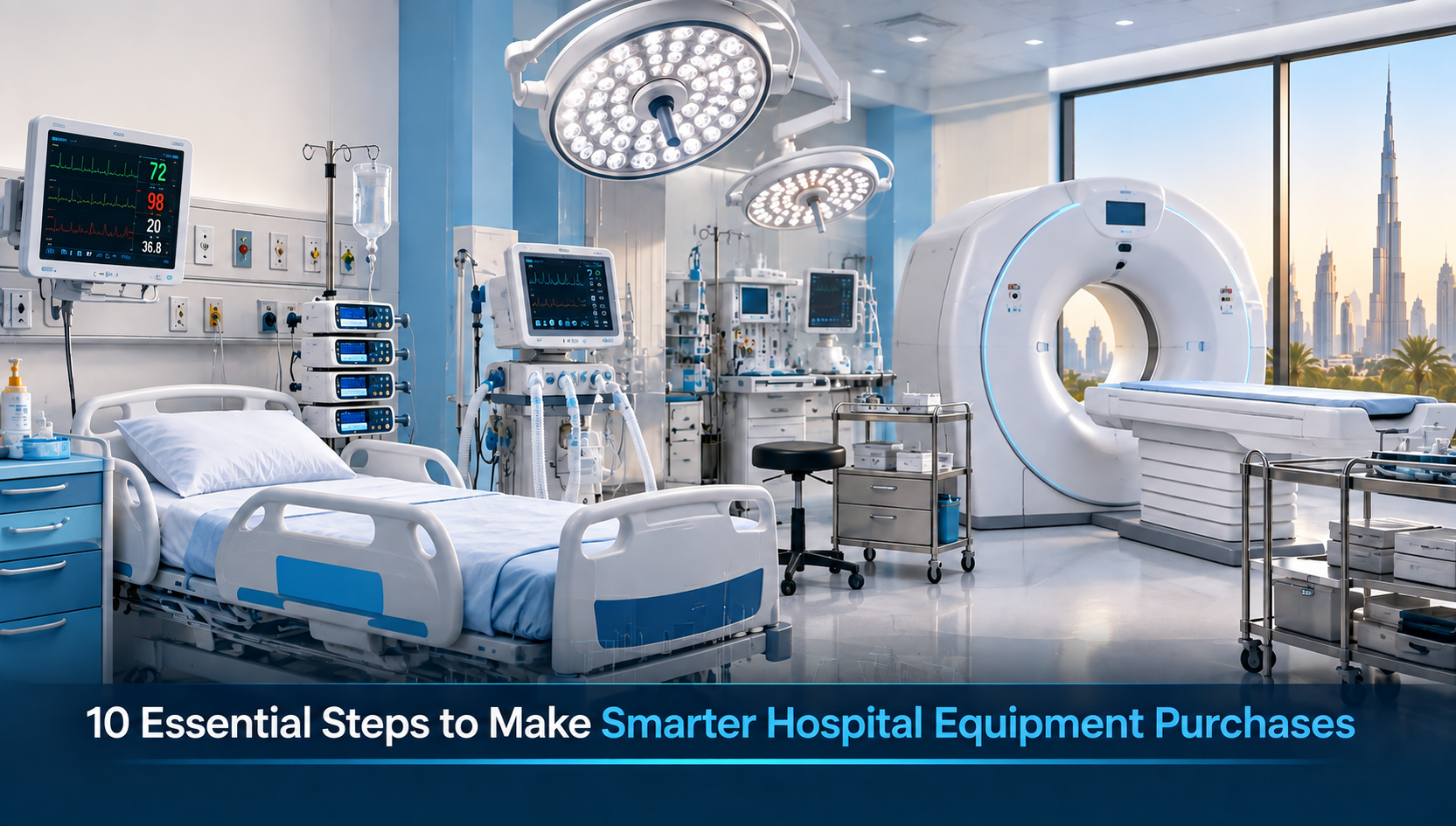
Purchasing hospital equipment is a major investment that directly affects patient care, clinical efficiency, staff safety and the long-term performance of a healthcare facility. From ICU and operating theatre equipment to laboratory systems, imaging technology and hospital furniture; every purchase needs careful consideration.
Choosing the right equipment is not simply about finding the lowest price. It is about finding the right combination of quality, functionality, reliability, service, and value.
Here are 10 essential steps to help hospitals and healthcare facilities make smarter equipment purchasing decisions.
1. Assess your needs
Before contacting suppliers, clearly identify what your facility actually needs.
Consider:
- Which departments require equipment?
- What procedures and services will be provided?
- How many patients will the equipment serve?
- What equipment is already available?
- What needs to be replaced or upgraded?
A detailed needs assessment helps prevent unnecessary purchases and ensures that every piece of equipment serves a clear clinical purpose.
2. Set a budget
Medical equipment can range from relatively simple devices to highly specialized and expensive systems. Establish a realistic budget before beginning the purchasing process.
However, avoid looking only at the initial purchase price. Consider the total cost of ownership, including installation, training, maintenance, consumables, spare parts, warranties and potential upgrades.
A slightly higher initial investment in reliable equipment can sometimes provide better long-term value than choosing the cheapest option.
3. Choose the right supplier
The supplier you choose can be just as important as the equipment itself.
Look for a medical equipment supplier with:
- Experience in healthcare projects
- A wide product range
- Reliable manufacturer partnerships
- Technical expertise
- Installation and commissioning capabilities
- After-sales support
- Maintenance and spare-parts services
- A strong reputation for customer service
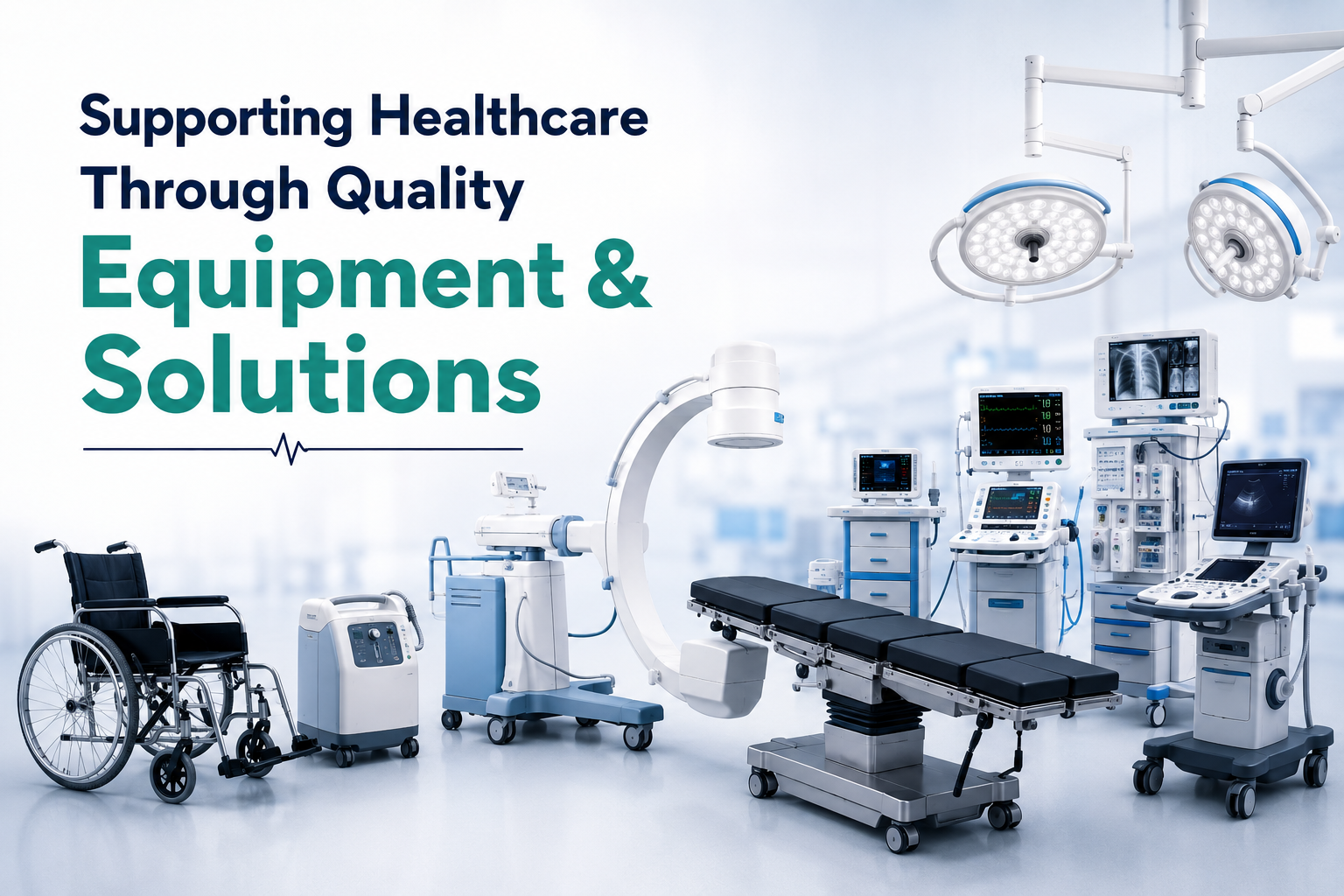
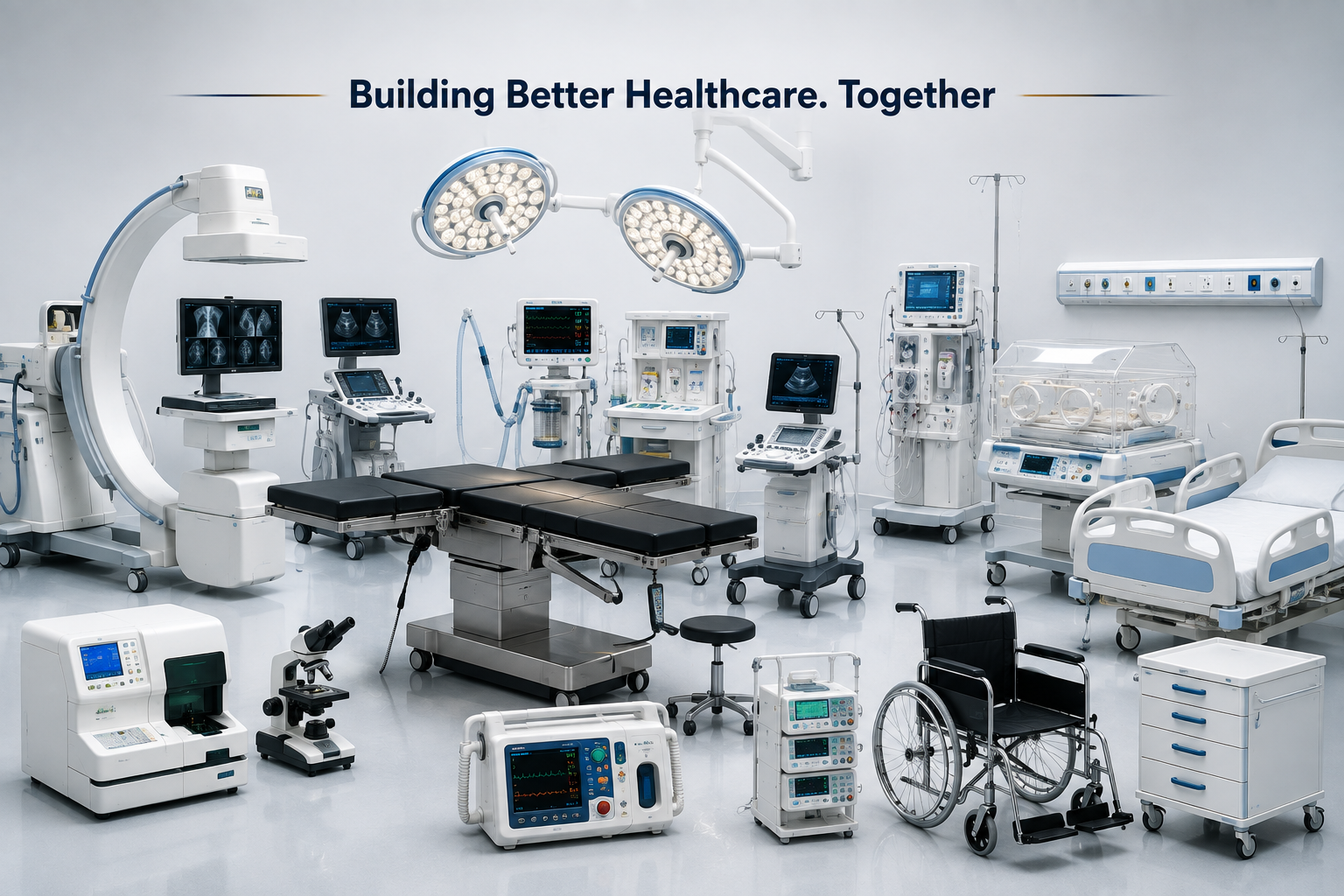
SRG Medical Equipment & Supplies supplies equipment for hospitals, clinics, laboratories, and other healthcare facilities, with product categories ranging from radiology and ICU equipment to laboratory, cardiology, respiratory, operating theatre, and hospital furniture solutions.
4. Verify quality
Quality and safety should never be compromised when purchasing hospital equipment.
Before making a purchase, verify the equipment’s:
- Certifications and regulatory compliance
- Manufacturer specifications
- Safety features
- Performance standards
- Warranty coverage
- Expected service life
- Availability of spare parts
Working with suppliers that source from approved manufacturers can help healthcare facilities make more confident purchasing decisions. SRG states that the equipment it supplies meets international quality and safety standards and works with established medical equipment brands.
5. Prioritize essential equipment
Not every piece of equipment needs to be purchased at once.
If you are setting up a new hospital or expanding an existing facility, prioritize equipment according to clinical importance.
Start with equipment essential for:
This approach allows healthcare providers to allocate budgets effectively while ensuring that critical departments have the equipment they need to operate.
6. Compare your options
Never make a purchasing decision based on a single quotation.
Compare equipment based on more than price. Look at:
- Technical specifications
- Features and functionality
- Brand reputation
- Warranty
- Installation requirements
- Maintenance costs
- Training
- Delivery timelines
- After-sales support
- Availability of spare parts
A proper comparison helps you understand the difference between low cost and genuine value.
7. Plan installation
Equipment should be considered as part of the hospital infrastructure; not as a standalone product.
Before ordering, confirm that the facility has the necessary:
- Electrical connections
- Plumbing and drainage
- Ventilation
- Space and room dimensions
- Networking and data connections
- Structural requirements
- Environmental conditions
Installation, testing, and commissioning should also be planned in advance. SRG provides installation, testing, commissioning and staff training as part of its healthcare equipment services.
8. Avoid common mistakes
Several purchasing mistakes can increase costs and create operational problems later.
Common mistakes include:
- Buying based solely on price
- Not checking equipment specifications
- Ignoring maintenance requirements
- Failing to verify certifications
- Not considering room infrastructure
- Underestimating training requirements
- Choosing equipment without checking spare-parts availability
- Failing to plan for future needs
A well planned purchasing process can help prevent these issues before they become costly problems.
9. Build long-erm partnerships
Your relationship with a medical equipment supplier should not end when the equipment is delivered.
Healthcare facilities need ongoing technical support, preventive maintenance, repairs, spare parts, training, and equipment upgrades.
A reliable supplier can become a long-term partner who understands your facility and helps support its changing requirements.
SRG Medical Equipment & Supplies offers after-sales support that includes preventive maintenance, repairs, spare-parts supply, technical assistance, and extended service contracts.
10. Final check
Before completing your purchase, conduct one final review.
Make sure you have confirmed:
- Equipment specifications
- Quantity
- Pricing
- Delivery schedule
- Warranty
- Installation requirements
- Training
- Certifications
- Maintenance arrangements
- Spare-parts availability
- Supplier support
A final check can help identify gaps before the purchase is finalized and ensure that the equipment meets your facility’s actual requirements.
Conclusion:
Purchasing hospital equipment is a long-term decision. The right equipment can improve clinical efficiency, support healthcare professionals, enhance patient care, and provide reliable performance for years.
The key is to look beyond the product itself and evaluate the supplier, quality, service, installation, training, maintenance, and total cost of ownership.
As a medical equipment supplier, SRG Medical Equipment & Supplies provides a broad range of equipment alongside procurement, installation, training, and after-sales support for healthcare facilities.
Whether you are equipping a new hospital, upgrading an existing facility, or purchasing equipment for a specialized department, a structured purchasing process can help you make a more informed and cost-effective decision.
Need help choosing the right medical equipment for your facility? Contact SRG Medical Equipment & Supplies to discuss your requirements and explore suitable equipment solutions.