Setting up a hospital involves much more than purchasing medical equipment. From initial planning and budgeting to procurement, logistics, installation, and staff training, every stage plays a vital role in preparing a healthcare facility for successful operations.
At SRG Medical Equipment and Supplies, we understand the complexities of hospital development. Our approach focuses on providing comprehensive, end-to-end hospital solutions that help healthcare providers streamline the process of equipping their facilities.
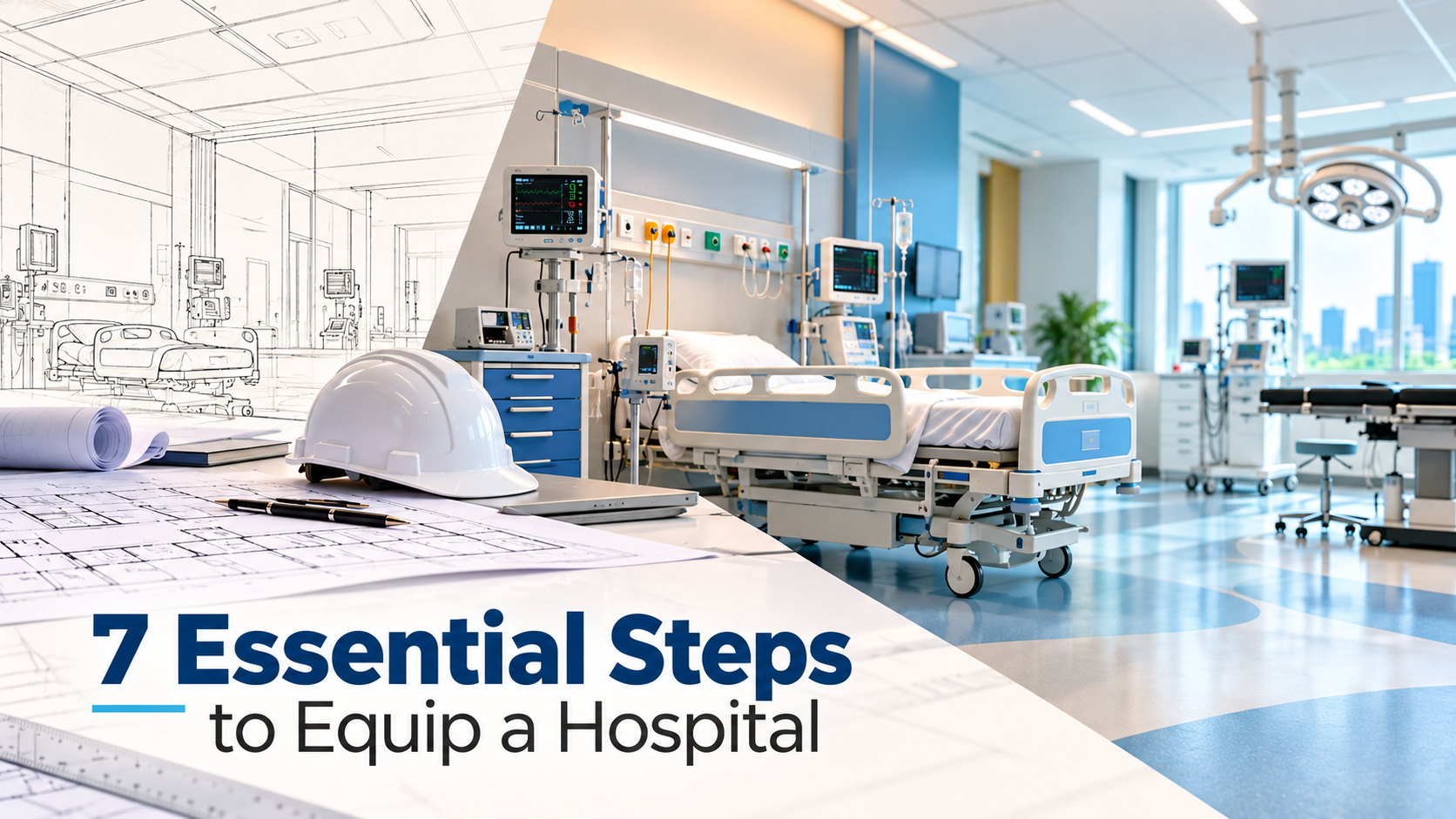
Here are seven essential steps to consider when equipping a hospital.
1. Needs assessment and engineering
Every successful hospital project begins with a clear understanding of its clinical and operational requirements. This includes assessing the hospital’s specialties, departments, patient capacity, infrastructure, and medical equipment needs.
Proper planning helps ensure that equipment selection aligns with clinical requirements and the facility’s overall design.
2. Budgeting and financial consulting
Effective financial planning is essential for managing hospital development costs. Equipment budgets should account for procurement, installation, logistics, training, and ongoing maintenance.
A structured budget helps healthcare investors and hospital management teams allocate resources efficiently while maintaining the required standards of care.
3. Tender management
Hospital projects often involve complex tendering and procurement processes. Effective tender management helps ensure that equipment specifications, supplier quotations, documentation, and project requirements are properly coordinated.
A well managed tender process supports transparency, cost control, and informed purchasing decisions.
4. Procurement and sourcing
Selecting the right medical equipment is critical to hospital readiness. Procurement involves identifying suitable products and manufacturers based on clinical needs, quality requirements, compatibility, and budget.
From critical care equipment to diagnostic systems and operating theatre solutions, strategic sourcing helps healthcare facilities obtain the equipment they need from appropriate suppliers.
5. Logistics and customs
Medical equipment delivery requires careful coordination, particularly for international hospital projects. Shipping schedules, documentation, customs clearance, and delivery planning must be managed to minimize delays.
Efficient logistics help ensure that equipment reaches the facility according to the project timeline.
6. Installation and commissioning
Once equipment arrives, it must be installed and commissioned in accordance with manufacturer requirements and relevant technical standards.
Coordination between equipment suppliers, engineers, contractors, and hospital teams is essential to ensure that equipment is ready for its intended clinical use.
7. Training and maintenance
Hospital readiness continues beyond installation. Healthcare professionals need appropriate training to operate medical equipment safely and effectively.
Planned maintenance and technical support also help maintain equipment performance, minimize avoidable downtime, and support long-term operational reliability.
Your Partner in End-to-End Hospital Solutions
Equipping a hospital requires coordination across multiple stages, from planning and financial consulting to equipment sourcing, delivery, installation, and after-sales support.
At SRG Medical Equipment and Supplies, we aim to simplify this process by supporting healthcare providers with integrated hospital solutions tailored to their project requirements.
Whether you are developing a new hospital, expanding an existing facility, or upgrading medical infrastructure, a structured approach to hospital equipment planning can help you move from an empty building to operational readiness with greater confidence.
Planning a hospital project?
Let SRG Medical Equipment and Supplies support your journey towards a fully equipped healthcare facility.