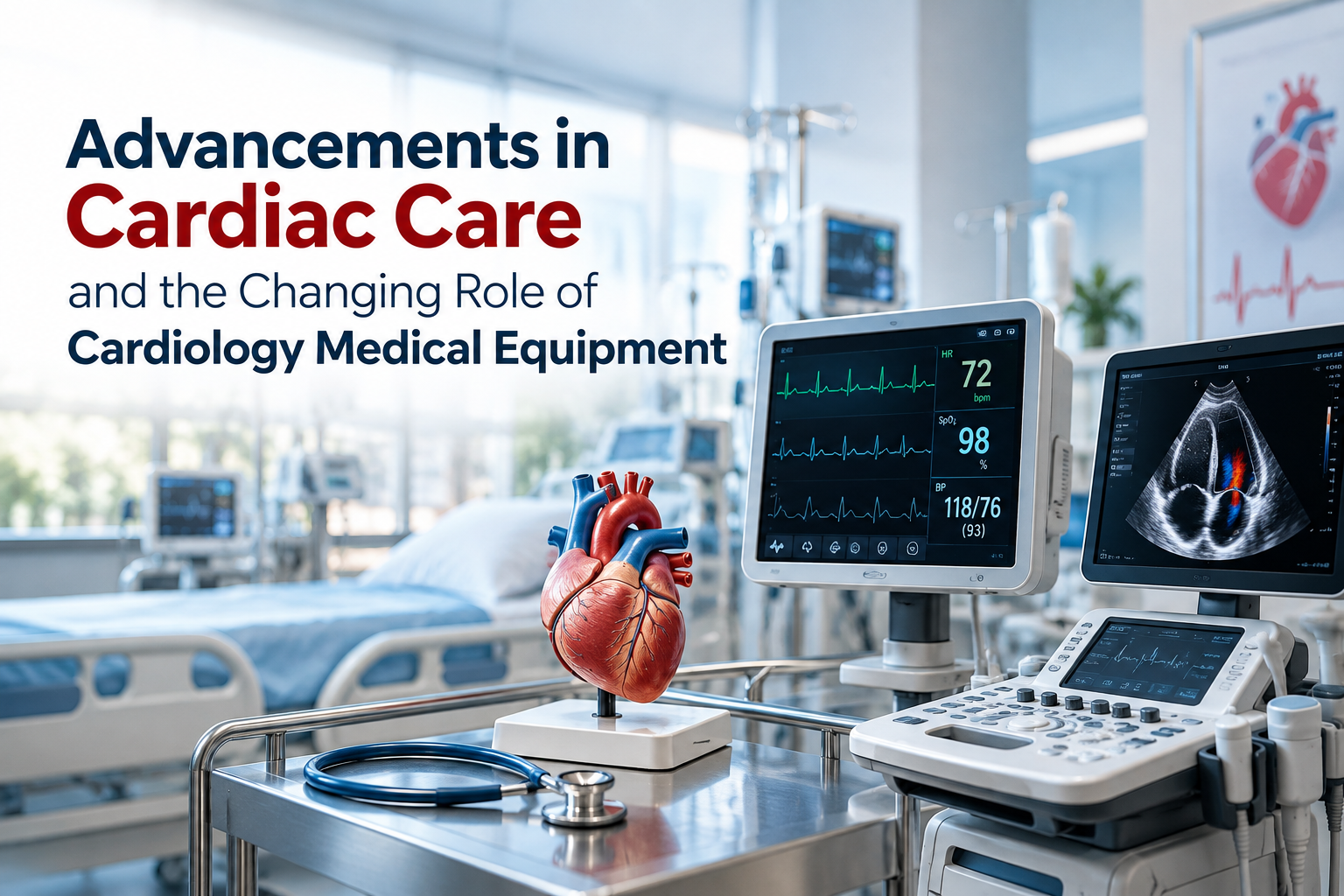
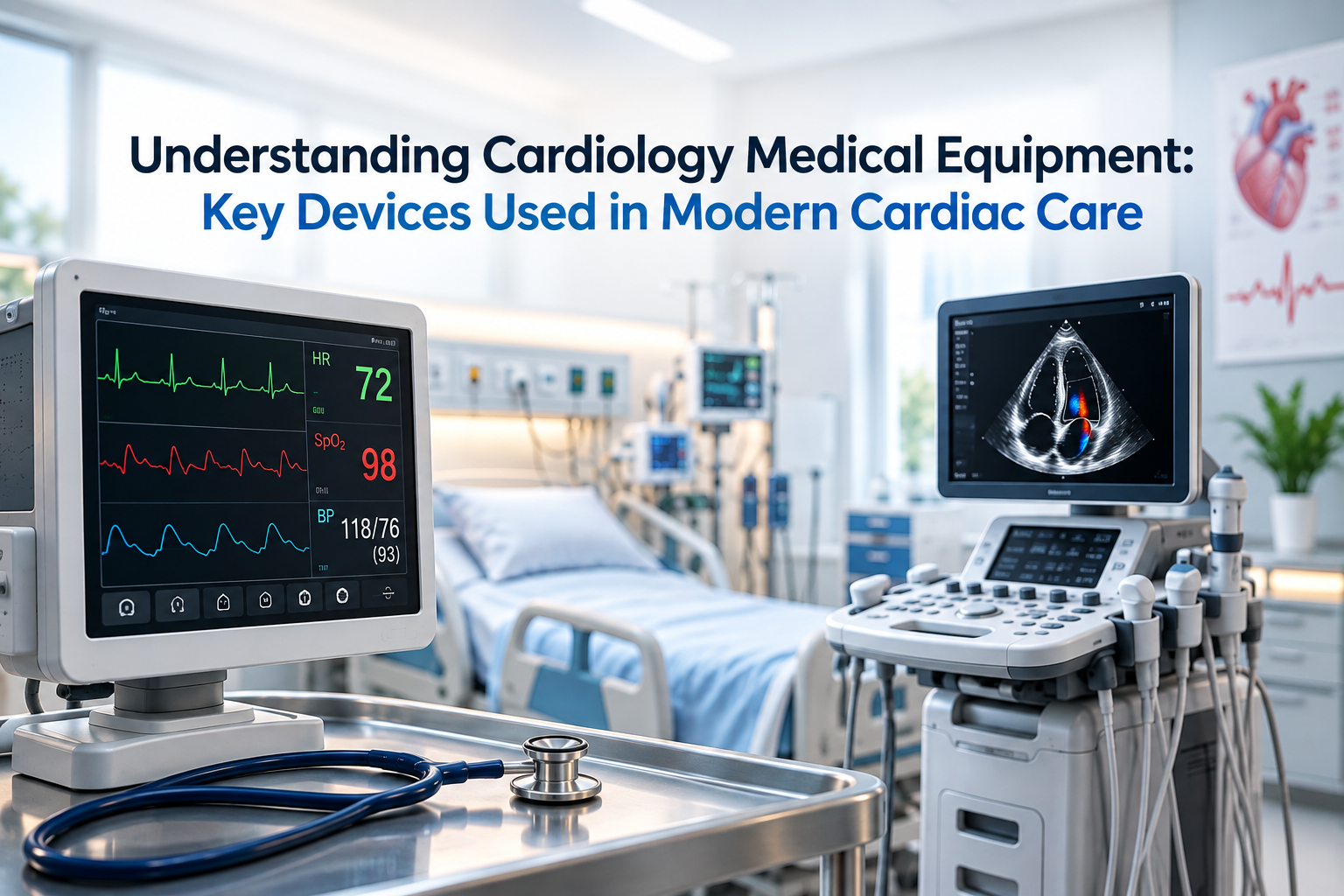
Cardiology is one of the most technology-driven areas of modern healthcare. From diagnosing abnormal heart rhythms to monitoring patients during critical situations, cardiology medical equipment plays a vital role in helping healthcare professionals make timely and informed clinical decisions.
At SRG Medical Equipment & Supplies, we understand that choosing the right cardiac equipment is about more than simply purchasing a machine. Healthcare facilities need reliable technology, appropriate clinical solutions, dependable supply, and continued technical support.
As a medical equipment supplier, SRG provides a range of cardiology equipment designed to support modern cardiac care.
What is cardiology medical equipment?
Cardiology medical equipment includes specialized devices used to diagnose, monitor, assess, and support the treatment of cardiovascular conditions.
These technologies are commonly used in:
- Cardiology departments
- Hospitals
- Cardiac care units
- Intensive care units
- Diagnostic centers
- Clinics
- Cardiac rehabilitation facilities
The right equipment can help healthcare professionals obtain accurate cardiac information while supporting efficient clinical workflows.
Key cardiology equipment used in modern cardiac care
1. ECG Machines
An Electrocardiogram (ECG) machine records the electrical activity of the heart.
ECG systems can help healthcare professionals assess:
- Heart rate
- Heart rhythm
- Electrical abnormalities
- Arrhythmias
- Possible signs of cardiac conditions
For hospitals and diagnostic centers, ECG equipment is often one of the first-line tools used when evaluating patients with cardiac symptoms.
At SRG, we focus on supplying cardiac diagnostic solutions that support accurate and efficient clinical assessment. We supply ECG equipment from trusted manufacturers like Schiller.
2. Holter Monitoring Systems
A Holter monitor is a portable device that continuously records a patient’s heart rhythm over an extended period.
It can be particularly useful when symptoms such as palpitations, dizziness, or irregular heartbeats occur intermittently and may not be detected during a short ECG examination.
SRG includes Holter monitoring systems within its cardiology equipment portfolio, helping healthcare facilities expand their capabilities for long-term cardiac rhythm monitoring.
3. Cardiac Patient Monitors
Continuous monitoring is essential for patients requiring close observation.
Modern cardiac monitors can track parameters such as:
- ECG
- Heart rate
- Blood pressure
- Oxygen saturation
- Respiratory rate
- Other vital signs
One of the brands SRG works with is Mindray. Their cardiac monitoring systems such as the N17/N15/N12 series or uMEC series, which offer ECG monitoring and multiple physiological parameters, along with data storage and connectivity capabilities are a part of our portfolio.
4. Cardiac Stress Testing Equipment
A cardiac stress test evaluates how the heart performs under controlled physical exertion.
Stress testing systems can combine ECG monitoring with a medical grade treadmill or ergometer to assess cardiac performance during exercise.
One of the key manufacturers in this area is SCHILLER Switzerland, whose medical ergometers supplied through SRG are designed for applications including exercise testing, stress echocardiography, and heart-rate-controlled training.
We also supplies the GYMNA medical treadmill, which is designed for applications including cardiology, cardiac rehabilitation, neurology, and physiotherapy.
5. Echocardiography Systems
Echocardiography, commonly known as an echo, uses ultrasound technology to produce images of the heart.
It can help clinicians assess:
- Heart chambers
- Heart valves
- Cardiac structure
- Blood flow
- Heart muscle function
For modern cardiac facilities, high quality cardiac ultrasound systems can provide valuable non-invasive information when assessing patients. Products from Mindray, Philips and others will provide accurate results.
6. Defibrillators
Defibrillators are essential emergency devices used to deliver an electrical shock to the heart during certain life-threatening cardiac rhythms.
They are commonly found in:
- Emergency departments
- ICUs
- Cardiac care units
- Operating theatres
- Ambulances
- Hospitals and clinics
For healthcare facilities, having appropriate emergency cardiac equipment readily available is an important part of preparedness for critical situations.
7. Ambulatory Blood Pressure Monitoring
Cardiovascular assessment is not limited to monitoring the heart rhythm. Blood pressure is also an important component of cardiac health.
Ambulatory blood pressure monitoring systems allow blood pressure measurements to be collected over an extended period during a patient’s normal daily activities.
SRG’s cardiology portfolio includes Ambulatory BP USB equipment alongside its Holter and cardiac stress-testing solutions.
SRG’s cardiology equipment partners
At SRG, we believe that dependable medical equipment starts with dependable technology partners.
Our current partner portfolio includes established medical equipment manufacturers such as Mindray, SCHILLER, ÜZÜMCÜ, Promek, Mixta, Topcon, Hermann Müller, MIR, GYMNA and Fresenius Medical Care.
For cardiology specifically, Mindray and SCHILLER are particularly relevant within SRG’s current equipment offering.
Why choosing the right cardiology equipment supplier matters
For a hospital, purchasing cardiac equipment is a long-term investment. The equipment must not only meet clinical requirements but also remain dependable throughout its operational life.
At SRG, our approach goes beyond simply delivering equipment.
We support healthcare facilities with:
- Equipment sourcing and procurement
- Product selection
- Tender management
- Logistics and delivery
- Installation and commissioning
- Staff training
- Technical support
- Operation and maintenance
- Preventive maintenance
- Spare parts and after-sales assistance
Our turnkey approach allows healthcare providers to work with one partner across multiple stages of their medical equipment requirements.
What should healthcare facilities consider when buying cardiology equipment?
Before investing in cardiac equipment, healthcare facilities should consider:
Clinical requirements
What cardiac procedures and diagnostic services will the equipment support?
Accuracy and reliability
Does the equipment provide dependable clinical data and consistent performance?
Ease of use
Can doctors, nurses, and technicians operate the equipment efficiently?
Connectivity
Can the equipment integrate with existing hospital information systems where required?
Training
Will staff receive appropriate training and operational guidance?
Service and maintenance
Is reliable technical support available after installation?
Long term value
Does the equipment provide value throughout its expected operational lifespan?
Conclusion
Modern cardiac care depends on accurate diagnostics, continuous monitoring, effective emergency response, and reliable technology.
From ECG and Holter monitors to cardiac monitoring systems, stress testing equipment, electrocardiography systems, and defibrillators, each device contributes to the broader cardiac care workflow.
At SRG, we combine medical equipment supply with procurement expertise, engineering support, installation, training, and ongoing service to help healthcare facilities develop dependable cardiac care capabilities.
For healthcare providers looking for reliable cardiology medical equipment, SRG Medical Equipment & Supplies is committed to being more than a supplier; we aim to be a long term healthcare equipment partner.